About
Blythe Adamson PhD, MPH
Health technology companies come to me to fill the gaps in their scientific evidence: to prove a product works, and to show what it is worth.
Health economist and epidemiologist. I answer the same questions for investors, payers, and public agencies, and for reporters when they reach the news.
- Founder
- Infectious Economics, independent research and advisory since 2017
- Industry
- Executive science leader in AI in health
- Academic
- Affiliate Professor, University of Washington, CHOICE Institute
- Based in
- New York City

TrainingPhD in health economics and MPH in epidemiology, University of Washington
ResearchMore than 100 peer-reviewed publications, cited more than 1,700 times
RecognitionBusiness Insider 30 Leaders Under 40 Transforming Healthcare. US delegate, Lindau Nobel Laureate Meeting
In the pressThe New York Times, The Atlantic, The Washington Post, Bloomberg. Live on Good Morning America, CNBC, and MSNBC
Who I help
I work in the gap between a promising health technology and a proven one
The companies that come to me have a product they believe in and a hard audience to convince: a regulator, a payer, a health system, an acquirer, or a board. Between the two sits an evidence gap. The pilot was small, the trial population does not look like the patients who will use the product, there is no comparison with the standard of care, or the health benefit is clear but no one has shown it is worth the price. I design and run the studies that close that gap: real-world evidence, cost-effectiveness and budget-impact models, and validation studies for medical AI, built to the standards regulators and payers require. Investors bring me the same questions from the other side of the table, when they need to know what a company has proven and what it has only asserted. Public agencies and foundations bring me decisions about where prevention money should go.
I can do this work because I have sat in most of those rooms. I started in a laboratory sequencing HIV and spent fifteen years on the search for an HIV vaccine while I trained as an epidemiologist and a health economist. At Flatiron Health I spent eight years working with pharmaceutical companies on real-world evidence and led the teams that turned cancer patients’ records into research datasets in the US, UK, Germany, and Japan. In 2020 I served in the West Wing as lead pandemic data scientist, then helped Disney, Warby Parker, and Broadway reopen. Today I am an executive science leader in AI in health, and through Infectious Economics I take on the evidence questions I think matter most.
I grew up next to an oyster farm in Gig Harbor, Washington. I live in Manhattan with my two daughters. We ride Citi Bikes through Central Park, see Broadway shows, and visit the Metropolitan Museum of Art.
Selected work
Evidence standards for medical AI
As the research executive at a healthcare AI company, I set the standard of evidence for what the technology has to prove before and after it reaches patients. My published work on this problem includes the VALID framework for checking the accuracy of data extracted by language models, and I served on the ISPOR task force that wrote the PALISADE checklist for machine learning in health economics.
Real-world evidence for pharmaceutical partners in four countries
As Head of Health Outcomes Research and Evidence Generation, International, I worked with pharmaceutical companies on the real-world evidence behind their regulatory, reimbursement, and commercial decisions, and led the teams that built and validated oncology research datasets from electronic health records in the US, UK, Germany, and Japan. I also led the design, validation, and rollout of a patented machine-learning tool that supports clinical decisions, with its validation published in npj Digital Medicine.
Carrying evidence from one country to another
I am lead author of the transportability framework endorsed by the International Society for Pharmacoepidemiology, which sets out when results from one population can be applied to another. From 2023 to 2024 I chaired the board of the GetReal Institute.
Pandemic decisions under pressure
I served in the West Wing as lead pandemic data scientist, advising the President and the COVID-19 task force on reopening models, ventilator allocation, and testing. Afterward I advised The Walt Disney Company, Warby Parker, Lincoln Center, and Broadway productions on the testing, air, and occupancy measures that let them reopen.
What I believe
Clinical trials cannot answer everything. Sometimes real-world evidence is the better evidence.
When the trial population does not look like the patients being treated, when the question is about long-term use or a comparator no one randomized, or when the decision cannot wait for a trial that has not started, carefully analyzed real-world data is the more honest answer. The standards for that analysis are as strict as for a trial, and I hold my own work to them.
Medical AI needs its own way of being evaluated.
The models change too often for a single trial to settle the question, and a randomized trial is often not possible. What works instead is a standing assessment of the trade-off between benefits and risks: real-world evidence from retrospective data, analyzed with robust study designs, and post-marketing surveillance that confirms continued safety and proves the incremental gains in health. Those gains are what justify a price, and value-based pricing of AI-enabled services needs health economics and outcomes research to set it.
Health benefit is necessary, not sufficient.
A product also has to make financial sense to the people who pay for it, or it will not be adopted and it will not last. A regulator, a payer, a health system, a patient, and an investor rarely agree on what something is worth, so I model value from each of their points of view, across countries when it matters.
Evidence belongs in the product roadmap from day one.
Start with the change you want to make. Work back to the evidence that would make it, then to the data and methods that produce that evidence. Every result is compared with the realistic alternative, and every assumption is published alongside it. That is what separates decision support from advocacy, and it is why the work survives hostile review.
Advisory work and media

Advisory
Through Infectious Economics I advise health technology companies, pharmaceutical and device companies, investors, foundations, and public agencies facing a decision about a health technology. The work covers health economics and outcomes research, real-world evidence studies, the evidence behind market access and commercial strategy, and a two-week evidence review of a company during a deal. I also serve on advisory boards and as an expert witness.
Media and speaking
Reporters call me for a plain answer on the economics of AI in health, drug and vaccine value, real-world evidence, pandemic preparedness, and healthy buildings. I have been featured in The New York Times, The Atlantic, The Washington Post, and Bloomberg, and appeared live on Good Morning America, CNBC, and MSNBC. I also give keynotes and moderate panels, including two sessions at Aspen Ideas: Health in 2026 and a Milken Institute conversation on AI in medicine.
Disclosure. I am SVP of Research at Doctronic, a healthcare AI company, and I disclose that role in my publications, talks, and engagements. I do not advise companies that compete directly with Doctronic.
Work with me
Send a sentence about the decision you are facing and the data you have. If it looks like a fit, the next step is a 30-minute call.
Journalists and event organizers: same address, and the press kit below has a standard bio and headshots.
Page updated 25 September 2026
Reference
Frequently Asked Questions
What kinds of organizations do you work with?
I work with health technology companies, pharmaceutical and medical device companies, investors, public agencies, foundations, and health systems that need independent scientific evidence about a technology. The closest fit is an organization facing a high-stakes decision, with real-world data in hand and a regulator, payer, board, or legislature to persuade.
Do you work with pharmaceutical companies?
Yes. For eight years at Flatiron Health I worked with pharmaceutical companies on real-world evidence, leading health outcomes research and evidence generation for oncology partners in the US, UK, Germany, and Japan, and building a research consortium of biopharma partners and government leaders on carrying evidence across countries. Through Infectious Economics I take on health economics and outcomes research (HEOR) for pharmaceutical, vaccine, and device companies: cost-effectiveness and budget-impact models, evidence for health technology assessment, and the economic case behind market access and commercial strategy.
What do you deliver?
I deliver cost-effectiveness and budget-impact models, real-world evidence studies published in peer-reviewed journals, validation studies for medical AI, value evidence for payers and health technology assessment, evidence diligence memos for investors, return on investment and cost-of-inaction estimates for funders and public agencies, publication strategies, and executive workshops.
Can you do diligence on a company inside a deal timeline?
Yes. I run investor diligence as a focused two-week sprint. I sign the NDA, work through the data room and management materials, test the key assumptions with the company’s team, and return a written memo of about five pages that separates what the company has proven from what it is asserting, followed by an in-person briefing. The fee is fixed and quoted before work begins.
When is the right time to bring you in?
Before the decision, with data in hand. For a company that needs peer-reviewed evidence in front of a regulator, payer, or acquirer, that means after the first pilots and at least 12 months ahead, because peer review alone takes months. For an investor, it means the day the data room opens. For a funder or a public agency, it means while the options are still open.
What should be required before AI is used in patient care?
Not the drug playbook. Medical AI changes too often for a single trial to settle the question, and a randomized trial is often not possible. What I require instead is a standing evaluation: an explicit account of the benefits and risks, real-world evidence from retrospective data analyzed with robust study designs, transparent assumptions, and post-marketing surveillance that confirms continued safety and measures the incremental gain in health. I design evaluations to catch the harms that accuracy scores miss, including confident wrong answers, clinicians deferring to the tool, and worse performance in patients the training data underrepresented. The methods behind that position are published in the VALID framework and the ISPOR PALISADE checklist.
What does an engagement look like?
It starts with a discovery call, then a written proposal with three options at different scopes, from a two-week diligence sprint or a single focused study to a multi-month evidence program. Each option is a fixed fee agreed before work begins. I sign the client’s NDA before seeing any material, and I state the assumptions behind every result. Studies run several months and end with something citable. Diligence runs on the deal’s timeline.
Which topics do you comment on for journalists?
The economics of AI in health, what drugs and vaccines are worth and how prices are set, real-world evidence and what it can and cannot prove, pandemic preparedness and testing, healthy buildings and indoor air, and how Medicaid and insurance coverage change who gets treated. I give a plain answer with the evidence behind it, on the record, and I say so when the honest answer is that nobody knows yet. Reach me at blythe@infectiouseconomics.com, and the press kit on this page has a standard bio and headshots.
Do you work internationally?
Yes. I have built and validated research datasets in the US, UK, Germany, and Japan, modeled HIV vaccine and prevention investment cases for South Africa with the Gates Foundation’s Institute for Disease Modeling and the HIV Vaccine Trials Network, trained clinical site staff in 28 countries, and led the International Society for Pharmacoepidemiology working group on transporting evidence between countries. Regulatory and payer expectations differ by system, so I design evidence to hold in more than one.
Do you work across the political spectrum?
Yes. I am a nonpartisan scientist. I served in the West Wing in 2020 under the Trump administration, and my work there is described favorably in memoirs by Jared Kushner and by Andy Slavitt, who ran Medicare and Medicaid under President Obama. I am not a registered lobbyist. The model is the same regardless of who is asking.
Is Infectious Economics a firm, or just you?
I lead every engagement personally. For special projects I assemble lean teams from an expert network of AI computer scientists, clinicians, and public health leaders. Infectious Economics, LLC was founded in 2017 and is based in New York.
Press kit and full record
Speaker bio and headshots for event organizers and press
Headshots
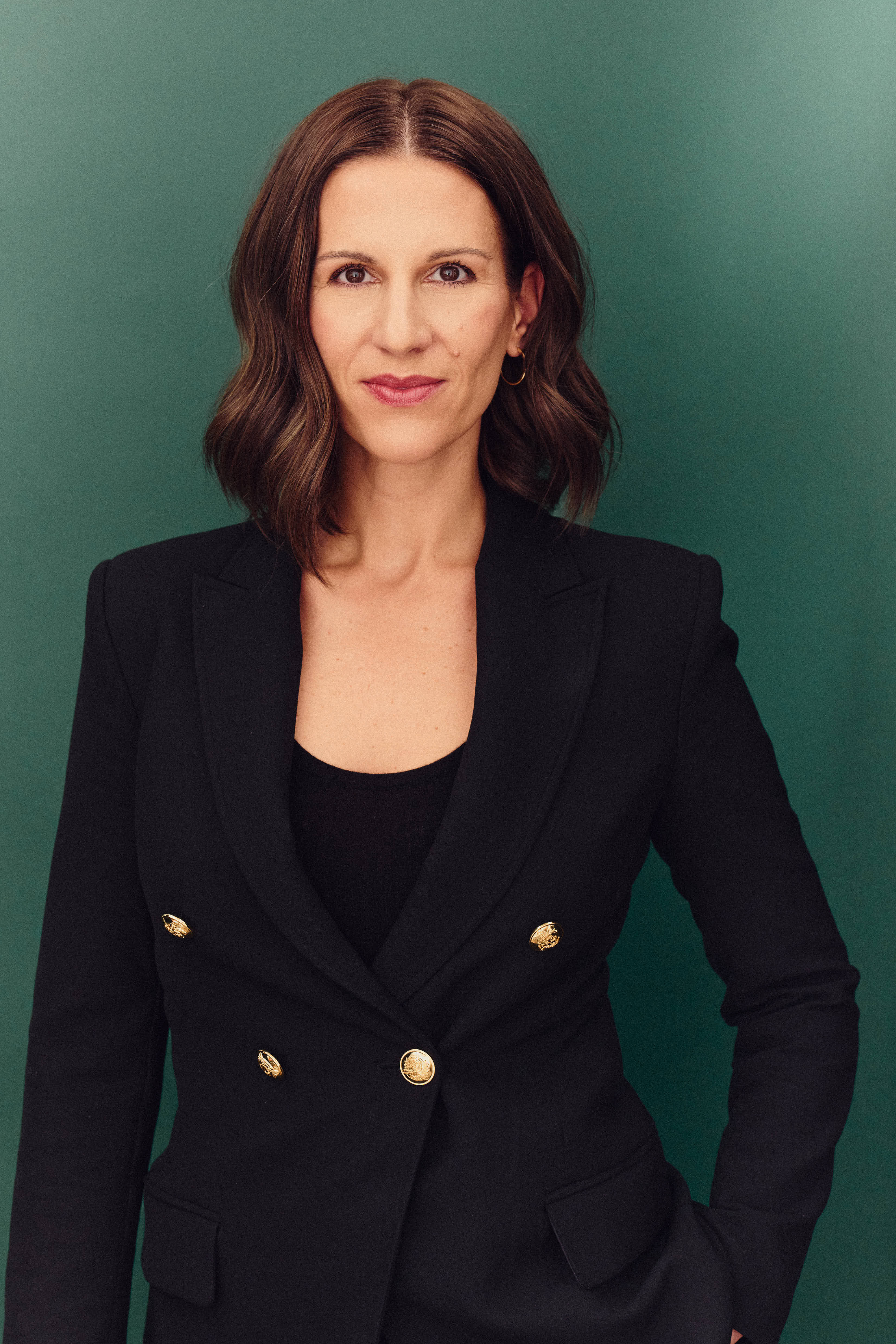
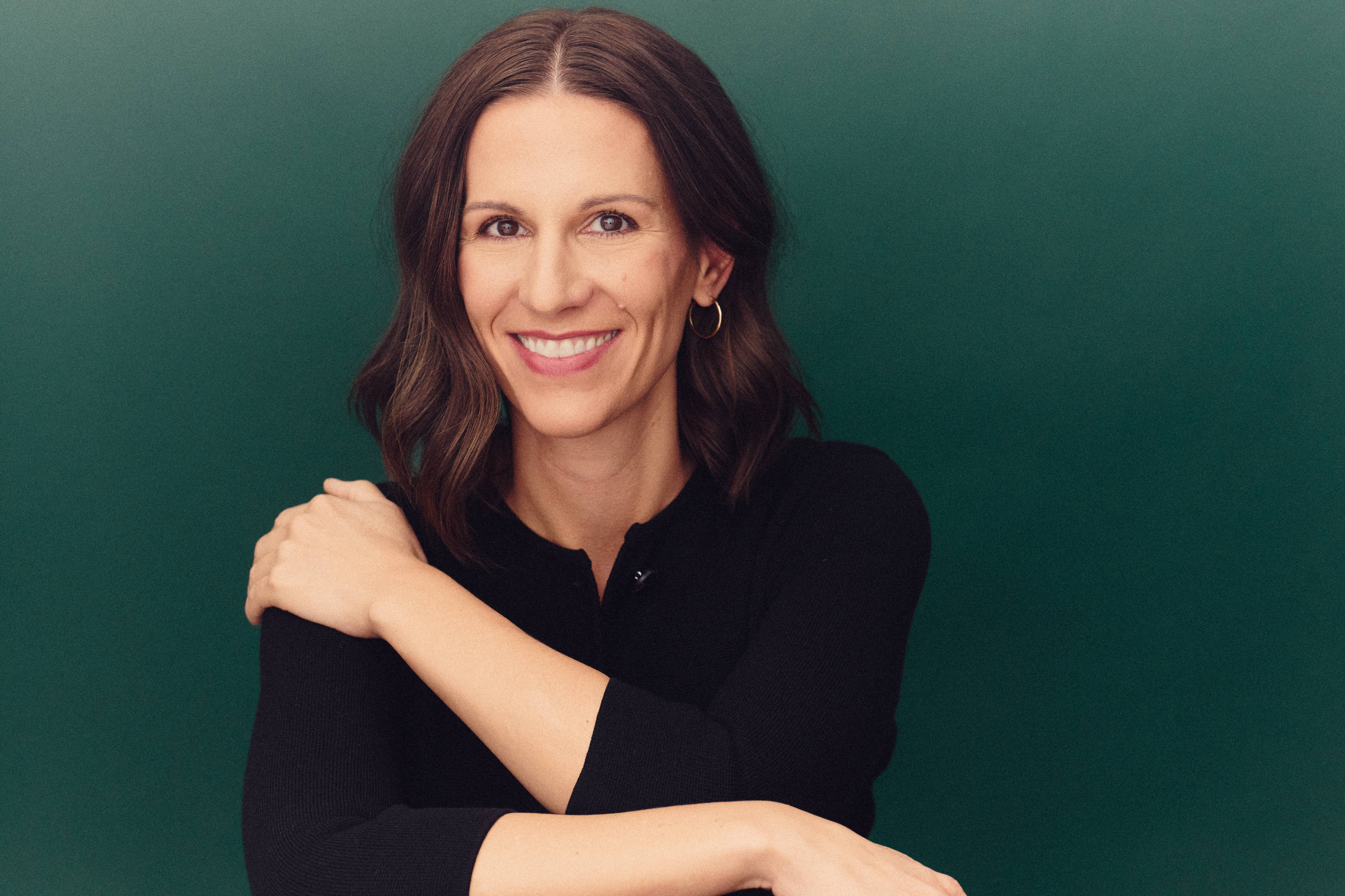
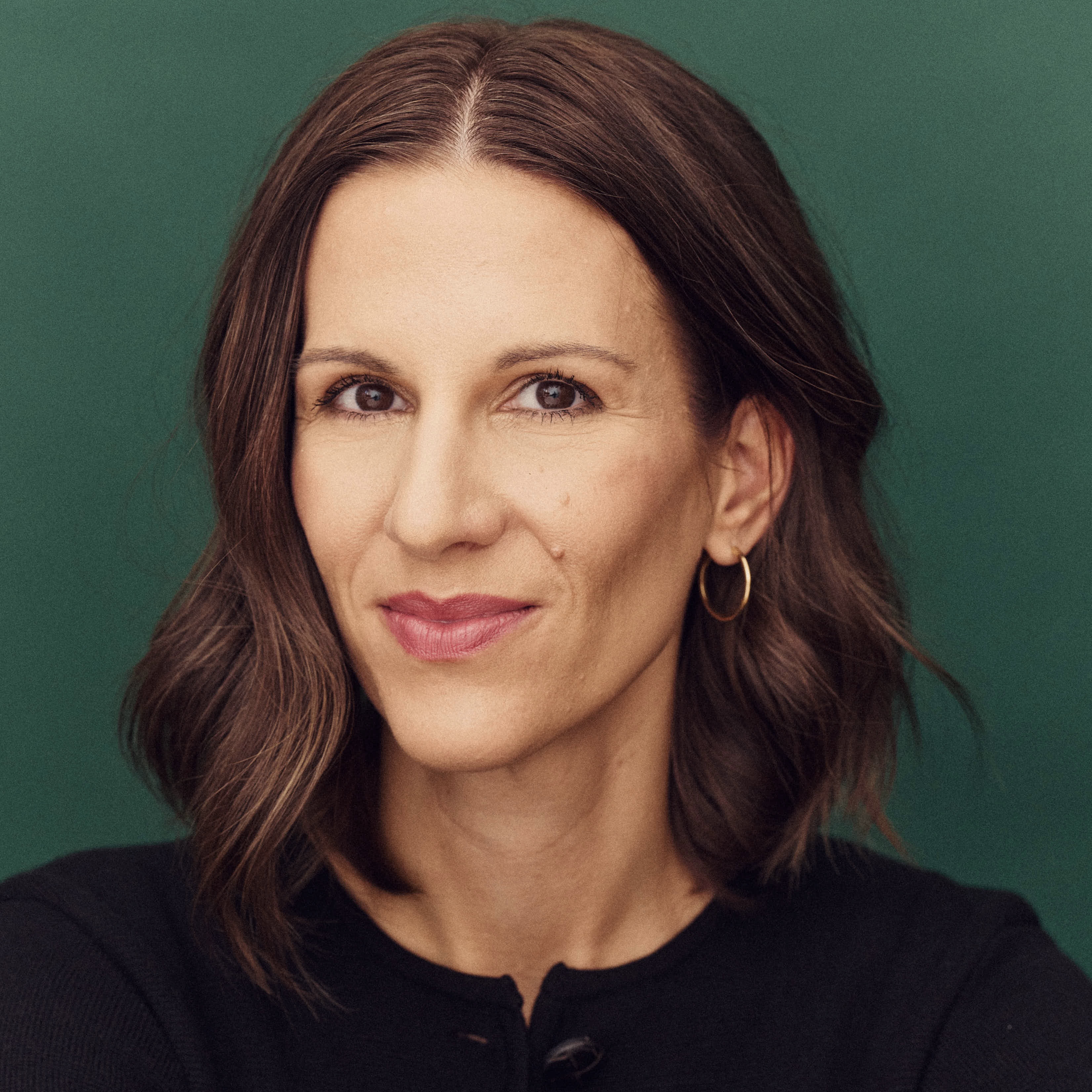
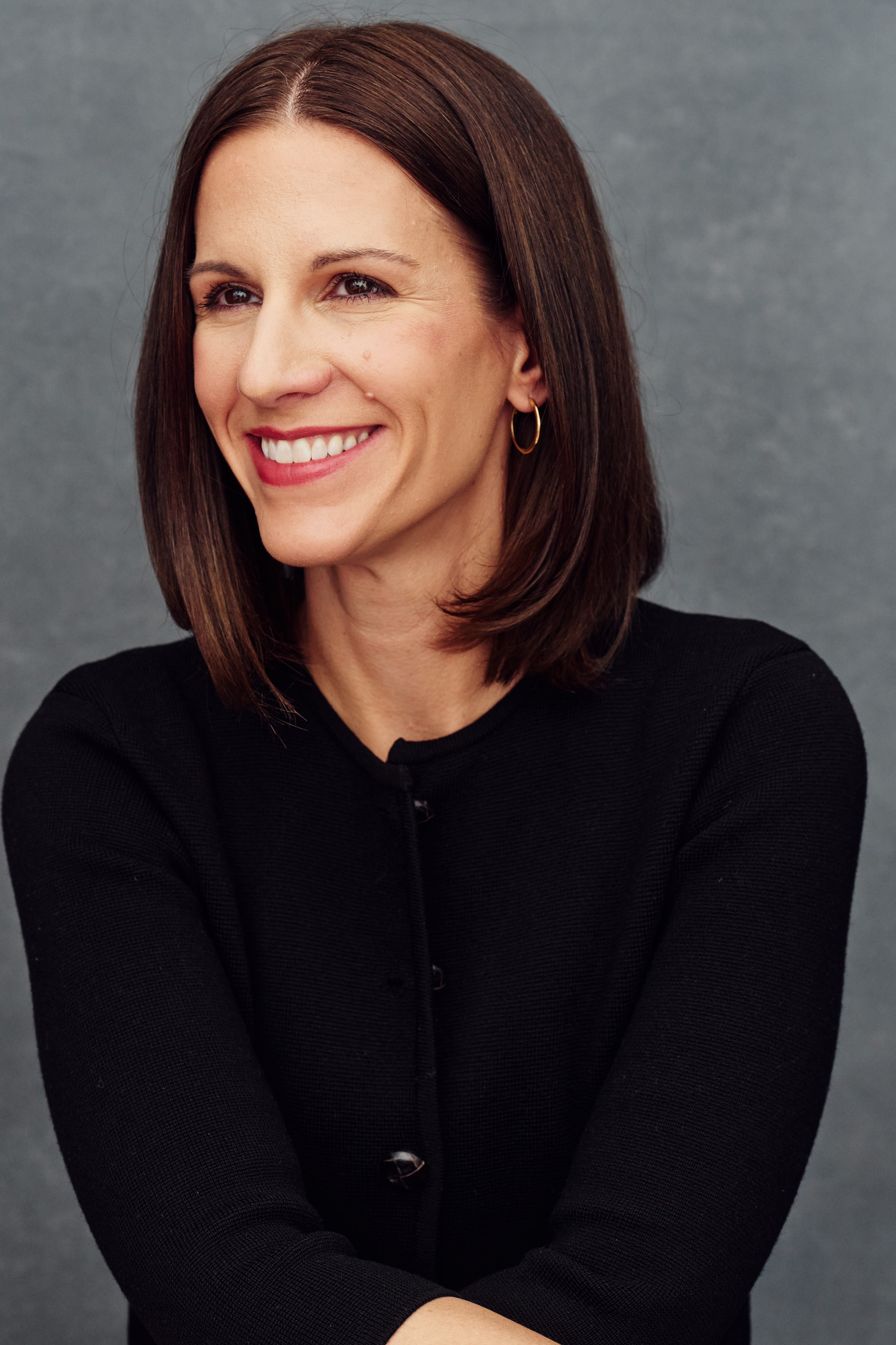
Five current photographs, all from the same 2026 session. Click any caption or image to download the full-resolution file. Please credit “Photo courtesy of Blythe Adamson” if a credit line is required.






Current roles
Blythe Adamson is the Founder of Infectious Economics, SVP of Research at Doctronic, and an Affiliate Professor at the University of Washington.
- Founder, Infectious Economics, LLC (New York, 2017 to present)
- SVP of Research, Doctronic, healthcare AI (June 2026 to present).
- Affiliate Professor, The Comparative Health Outcomes, Policy, and Economics (CHOICE) Institute, University of Washington School of Pharmacy (2019 to present)
- Lecturer on cost-effectiveness analysis, Columbia University (2026)
Past roles and employers
Blythe Adamson previously worked at Flatiron Health, The White House, the Bill & Melinda Gates Foundation, and Fred Hutchinson Cancer Center, and has trained military strategists at the Pentagon.
- Flatiron Health, New York (2018 to 2026). Senior Principal Scientist and Head of Health Outcomes Research and Evidence Generation, International, reporting to the Chief Medical Officer; previously Director of Quantitative Sciences and Senior Quantitative Scientist. Led the teams that built and validated EHR-derived oncology research datasets in the US, UK, Germany, and Japan, and the design, validation, and rollout of a patented machine-learning clinical decision-support tool, with its validation published in npj Digital Medicine (2022).
- The White House, West Wing (2020). Lead pandemic data scientist advising the President and the COVID-19 task force on reopening models, ventilator allocation, and testing infrastructure.
- The Pentagon. Trained senior military strategists on pandemic decision models.
- Institute for Disease Modeling, Bill & Melinda Gates Foundation, Bellevue, WA (2016 to 2017). Health economist building cost-effectiveness inputs into global HIV and infectious disease models to guide investment decisions.
- NIAID HIV Vaccine Trials Network and Fred Hutch Cancer Center, Seattle (2007 to 2014, and 2016 to 2018). Health economist, and earlier project manager for vaccine trial protocol committees; delivered 30 or more trainings for clinical site staff in 28 countries; created mentoring programs that awarded 40 or more research scholars.
- Department of Laboratory Medicine, University of Washington (2003 to 2006). Laboratory technician on PCR, sequencing, and phylogenetics of HIV dual infection.
Education
Blythe Adamson has a PhD in health economics, an MPH in epidemiology, and a bachelor’s degree in microbiology, all from the University of Washington.
- PhD, Pharmaceutical Outcomes Research and Policy (health economics), University of Washington
- MPH, Epidemiology, University of Washington
- BS, Microbiology, University of Washington
Awards and honors
Blythe Adamson was named one of Business Insider’s 30 leaders transforming healthcare and represented the United States at the Lindau Nobel Laureate Meeting on Economic Sciences.
- Business Insider, 30 Leaders Under 40 Transforming Healthcare↗ (2019)
- United States delegate and speaker, Lindau Nobel Laureate Meeting on Economic Sciences (2017)
- Davis Wright Tremaine Most Innovative Award, Buerk Center for Entrepreneurship, University of Washington
Books that describe Blythe’s work
Blythe Adamson’s work has been described in several books, including memoirs by Jared Kushner, Andy Slavitt, and Admiral Brett Giroir.
- Jared Kushner, Breaking History: A White House Memoir (2022). On the Roosevelt Room review of her reopening projections.
- Andy Slavitt, Preventable (2021). On modeling inside the White House response.
- Admiral Brett Giroir, Memoir of a Pandemic. On translating models for the FEMA teams.
Selected publications
Blythe Adamson has published more than 100 peer-reviewed scientific papers, has been cited more than 1,700 times, and has an h-index of 23. Full citation metrics are live on Google Scholar↗.
- Adamson B, et al. Transportability analyses in comparative effectiveness research: a conceptual framework and methodological principles endorsed by the International Society for Pharmacoepidemiology. Pharmacoepidemiology and Drug Safety, 2026. doi:10.1002/pds.70396↗
- Estevez M, Singh N, Dyson L, et al. The VALID Framework: Validation of Accuracy for LLM/ML-Extracted Information and Data. JCO Clinical Cancer Informatics, 2026. doi:10.1200/CCI-25-00215↗
- Representativeness and mortality endpoint validation of EHR-derived oncology cohorts in Germany. BMC Cancer, 2026. doi:10.1186/s12885-026-15548-8↗
- Adamson B, et al. Approach to machine learning for extraction of real-world data variables from electronic health records. Frontiers in Pharmacology, 2023. doi:10.3389/fphar.2023.1180962↗
- Padula WV, et al. Machine learning methods in health economics and outcomes research: the PALISADE checklist. ISPOR Task Force good practices report. Value in Health, 2022.
- Coombs L, et al. A machine learning framework supporting prospective clinical decisions applied to risk prediction in oncology. npj Digital Medicine, 2022.
- Adamson BJ, et al. Association of Affordable Care Act Medicaid expansion with racial disparity reduction in timely cancer treatment. American Journal of Managed Care, 2021. Presented at the ASCO plenary session. Read↗
- Parikh RB, Adamson BJ, et al. Association between FDA label restriction and immunotherapy and chemotherapy use in bladder cancer. JAMA, 2019.
- Adamson B, et al. Potential competition between biomedical HIV prevention strategies in Seattle, WA. Journal of the International AIDS Society, 2019.
- Adamson B, et al. The cost-effectiveness of financial incentives for viral suppression: HPTN 065. Value in Health, 2019.
- de Montigny S, Adamson B, et al. Projected effectiveness and added value of HIV vaccination campaigns in South Africa. Scientific Reports, 2018. Read↗
- Adamson B. Schools need to reopen now. Here’s how to do it safely. USA Today, op-ed, July 2020. Read↗
Media appearances
Blythe Adamson has been a live guest on television including Good Morning America, CNBC, MSNBC, CBS News, and Fox Business, and has been featured in The New York Times, The Washington Post, The Atlantic, Rolling Stone, and Vanity Fair.
- C-SPAN. Oval Office briefing with Drs. Fauci, Birx, and Adamson on trial results (2020). Watch↗
- Good Morning America. Why COVID-19 testing is key to reopening schools and businesses (2020). Watch↗
- Good Morning America. You’re 20 times more likely to get COVID-19 indoors (September 2020). Watch↗
- CNBC Power Lunch. Frequent testing is the only way to safely reopen colleges (August 2020). Watch↗
- CBS News. The importance of COVID-19 testing to stop the spread (September 2020). Watch↗
- Fox Business. How to safely reopen schools (July 2020). Watch↗
- MSNBC. COVID-19 vaccine efficacy and FDA approval (December 2020), and White House response team briefing commentary (February 2021).
- The New York Times. Have you satisfied your COVID compliance officer?↗ (2021); rapid test detection of Omicron↗ (2022); Broadway’s vaccine mandate↗ (2022).
- The Atlantic. The plan that could give us our lives back↗ (August 2020).
- The Washington Post. Broadway’s COVID prevention plan↗ (July 2021).
- Vanity Fair. Broadway is doing everything it can to safely reopen this fall↗ (August 2021).
- Rolling Stone. How Broadway plans to keep audiences safe↗ (2021).
- Bloomberg. Chaotic rules make it hard to know who should be tested↗ (August 2020).
- CNN. Testing deal promoted by White House failing to fix screening strategy↗ (September 2020).
- NBC News, ABC News, NPR, BBC World Service, USA Today, Business Insider, Deadline, and Variety. Featured expert commentary, 2019 to present.
Talks and podcasts
Blythe Adamson has spoken at Aspen Ideas: Health, the Milken Institute, The Atlantic’s People v. Cancer summit, the ASCO Annual Meeting, ISPOR, HLTH, and the Duke-Margolis Institute for Health Policy.
- Aspen Ideas: Health 2026, moderator, Preparing for the Next Pandemic↗ with Ashish Jha, Jessica Malaty Rivera, and John Nkengasong
- Aspen Ideas: Health 2026, moderator, Healthy Buildings for Healthy Lives↗ with Rachel Hodgdon, Joe Allen, and Diana Araoz-Fraser
- Milken Institute, panelist, Is AI Just What the Doctor, or Patient, Ordered?↗
- The Atlantic, People v. Cancer summit, panelist on cancer disparities and financial toxicity (2019). Watch↗
- ASCO Annual Meeting, plenary session presenter: Medicaid expansion and racial disparities in timely cancer treatment
- Duke-Margolis Institute for Health Policy, speaker, Your Treatment and Your Community (2025)
- HLTH 2021, speaker
- ISPOR annual conferences, invited speaker and short-course faculty
- Variety, Stagecraft podcast: Broadway’s COVID safety expert (2021). Listen↗
- Guest lecturer on cost-effectiveness analysis, health technology assessment, and reproducible real-world data science at Columbia University, the University of Washington, and professional society short courses
Advisory boards and professional service
Blythe Adamson served as Chairman of the Board of the GetReal Institute, is lead author of the ISPE-endorsed transportability framework, and has served on advisory boards, task forces, and a doctoral committee for Yale School of Public Health, Testing for America, ISPOR, and the University of Washington.
- Chairman of the Board, GetReal Institute (2023 to 2024)
- Advisory Board, SalivaDirect at Yale School of Public Health (2020 to 2023)
- Advisory Council, Testing for America (2020)
- Member, ISPOR Task Force on Machine Learning in Health Economics and Outcomes Research (2019 to 2022)
- Lead author of the ISPE-endorsed transportability framework (Pharmacoepidemiology and Drug Safety, 2026), the society’s principles for transporting real-world evidence between populations and countries
- Doctoral dissertation committee member, CHOICE Institute, University of Washington
- Member, International Society for Pharmacoeconomics and Outcomes Research (ISPOR) and International Society for Pharmacoepidemiology (ISPE)
Company details
Infectious Economics, LLC is a health economics and outcomes research firm founded by Blythe Adamson in New York in 2017.
- Legal name: Infectious Economics, LLC
- Founded: 2017, by Blythe Adamson
- Based in: New York, New York
- Websites: blytheadamson.com and infectiouseconomics.com
- Email: blythe@infectiouseconomics.com